
More than three years after a Norfolk Southern freight train derailed in East Palestine, Ohio, the Environmental Protection Agency is facing a new federal investigation into whether it adequately protected residents and provided reliable information about the disaster’s health and environmental consequences.
The EPA’s Office of Inspector General announced the investigation on October 27, 2026, following requests from residents, Vice President JD Vance and EPA Administrator Lee Zeldin.
The review will examine whether the agency fulfilled its responsibilities and possessed sufficient scientific evidence to assure the public that the community was safe.
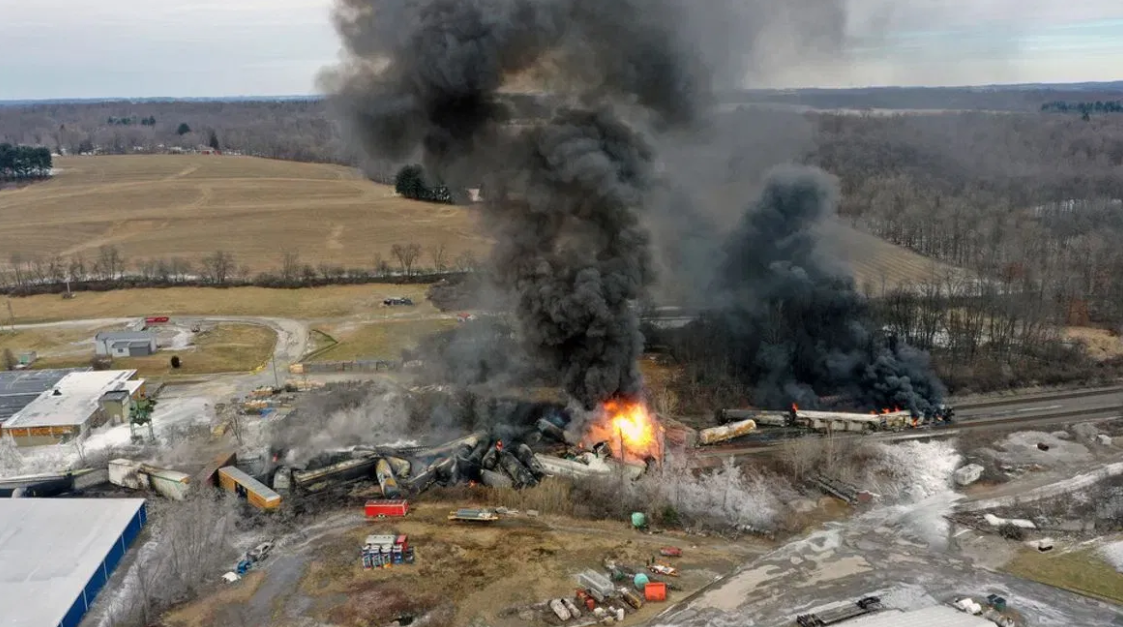
On February 3, 2023, a Norfolk Southern freight train derailed near the Ohio-Pennsylvania border after an overheated wheel bearing failed. Several railcars carrying hazardous chemicals caught fire, prompting emergency evacuations.
Three days later, officials deliberately released and burned vinyl chloride from five tanker cars, creating a massive black smoke plume that spread across the surrounding region. Emergency responders feared the damaged tankers might explode, but the National Transportation Safety Board later concluded that the controlled chemical release and burn was unnecessary.
The decision remains one of the disaster’s most controversial aspects. The new investigation will focus partly on whether the EPA had adequate information to support its public statements about environmental safety.
Following the derailment, federal officials conducted extensive air, soil and water monitoring and repeatedly reassured residents that dangerous chemical concentrations were not lingering in the community. However, some scientists questioned whether the testing fully captured the risks associated with exposure to multiple chemicals.
Existing health standards frequently evaluate individual substances rather than complex mixtures, potentially complicating assessments of combined exposure. Residents also raised concerns about the timing and scope of testing for dioxins, toxic compounds that can form during certain chemical combustion processes.
The inspector general will examine whether the EPA’s scientific assessments and public communications were sufficiently supported. East Palestine resident and community advocate Jami Wallace welcomed the investigation after years of campaigning for greater accountability.
Wallace has tracked more than 80 people in the surrounding area who have developed cancer since the derailment. However, determining whether individual illnesses were caused by chemical exposure from the accident remains scientifically difficult.
Residents have reported various health concerns and expressed frustration over what they consider insufficient transparency from government agencies. For many families, the central issue is whether officials had enough evidence to declare their homes and neighborhoods safe.
The investigation could clarify how those decisions were made, although it will not automatically establish the causes of reported illnesses. The railroad’s financial and legal responsibilities remain unresolved.
Norfolk Southern agreed to a $600 million class-action settlement with residents, but distribution has been complicated by court disputes and questions surrounding the administration of settlement funds. Some residents have also challenged the conduct of attorneys involved in the agreement.
A separate federal settlement includes a $15 million penalty and $55 million for long-term medical examinations and groundwater monitoring. That agreement has remained under judicial review without final approval. Meanwhile, Norfolk Southern is pursuing an approximately $85 billion merger with Union Pacific, a proposal that requires extensive federal regulatory scrutiny.
The EPA maintains that its cleanup and monitoring efforts have helped protect the community. Long-term environmental monitoring continues. Nevertheless, the inspector general’s investigation could reveal whether federal officials relied on adequate evidence when communicating potential health risks.
Its findings may also influence how future chemical emergencies are investigated and how quickly communities receive reliable information. For East Palestine residents, the investigation represents another opportunity to obtain answers about a disaster whose environmental, financial and emotional consequences continue years after the trains stopped burning.