
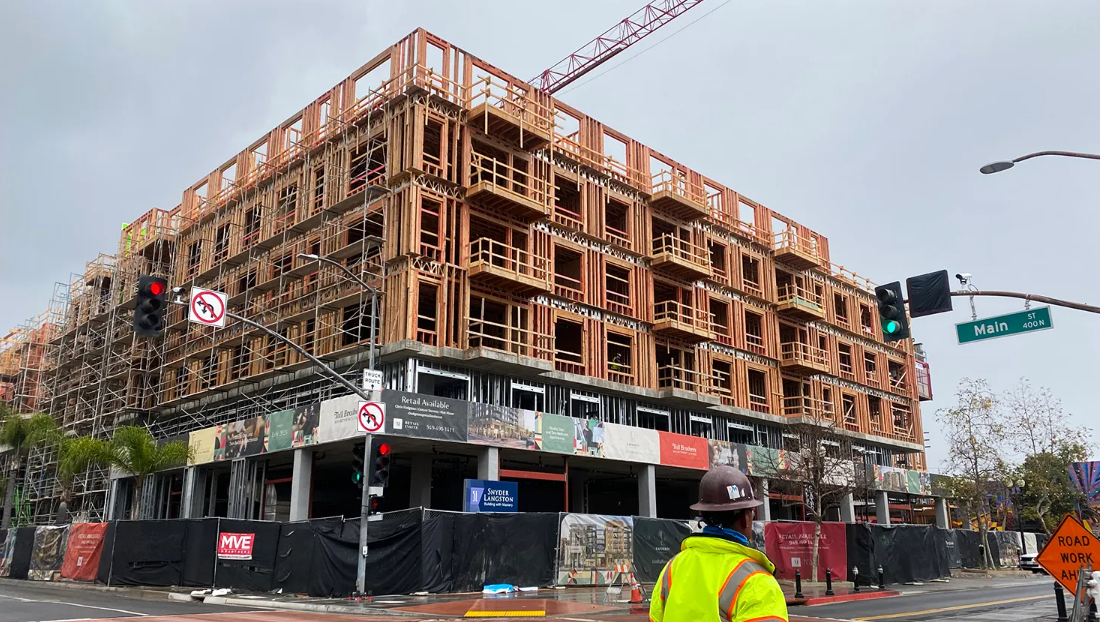
Los Angeles is confronting a striking contradiction in its housing crisis: the city desperately needs more apartments, but many developers say constructing them has become financially unattractive.
Despite persistent housing shortages and high rents, multifamily construction is slowing as developers confront elevated interest rates, falling apartment values, rising construction expenses, regulatory costs and taxes that can significantly reduce potential returns.
The deterioration of Los Angeles’ apartment market is illustrated by developer Paul Schon.
In 2021, Schon sold a 14-unit Hollywood apartment building he had developed for $6.5 million. Five years later, he bought the same property back for just $4.75 million.
That decline reflects a broader collapse in multifamily property values. According to Kidder Mathews data, the average sale price per apartment unit in Los Angeles County fell from approximately $397,289 in 2022 to $280,591 in 2026—a decline approaching 30%.
Construction activity is falling as well.
During the first half of 2026, developers completed 2,376 apartments across Los Angeles County, nearly 9% fewer than during the same period last year. About 25,636 units were under construction, representing a roughly 15% year-over-year decline.
Developers say one of the biggest problems is financing.
Apartment projects often require substantial borrowing, and interest rates have remained much higher than before 2022. Financing a development at approximately 7% instead of 2% can dramatically alter the economics of a project, particularly when property values are simultaneously declining.
Local expenses have added further pressure.
Developers argue that permitting, inspections and other “soft costs” now consume a much larger percentage of project budgets. Developer Yoni Chriqui estimates these expenses have increased from roughly 10%–12% of development costs when he entered the business to around 20%–25% today.
Certain city fees can also become substantial. Los Angeles’ park fee, for example, has climbed to $8,929 per multifamily unit in 2026. A 50-unit apartment development could therefore face nearly $450,000 in park fees alone.
Another controversial factor is Measure ULA, approved by Los Angeles voters in 2022.
The measure imposes a 4% or 5.5% transfer tax on property sales above $5.4 million, including apartment buildings and commercial properties. Supporters emphasize that ULA raises money for affordable housing and homelessness programs. Developers argue that the tax reduces the potential profitability of building and eventually selling multifamily projects.
Pandemic-era tenant protections also remain part of the debate. While rent freezes and eviction protections provided important assistance to renters during an unprecedented crisis, some developers say their financial effects continue influencing investment decisions.
The result is changing what gets built.
Rather than constructing 20-, 40- or 50-unit apartment buildings, some developers are choosing accessory dwelling units, townhouses or small groups of single-family homes that carry less financial risk.
Chriqui, for example, owns a 14,000-square-foot parcel capable of accommodating roughly 40 to 50 apartments. Instead, he plans to construct only 10 single-family homes.
Another property has approved plans for 56 units but remains a parking lot because the project does not currently make financial sense.
Even California’s new SB 79, which allows greater housing density near major transit stops, has not immediately changed the equation. Apparently, Los Angeles had not received a single project proposal using the new law.
City officials say they are working to remove barriers. Mayor Karen Bass has introduced faster permitting procedures, while her administration says nearly 50,000 affordable units are being expedited through Executive Directive 1.
The larger problem, however, is that Los Angeles’ housing shortage cannot be solved simply by allowing more density on paper.
Developers must also believe projects can generate sufficient returns to justify millions of dollars in investment and years of financial risk.
For Los Angeles renters, the consequences could be significant. If apartment construction continues falling while housing demand remains strong, the shortage that helped create the city’s affordability crisis could become even harder to solve.
Los Angeles may have the land, demand and legal authority to build more housing—but until the economics work again, thousands of potential apartments could remain architectural plans, vacant lots and parking spaces instead of homes.